
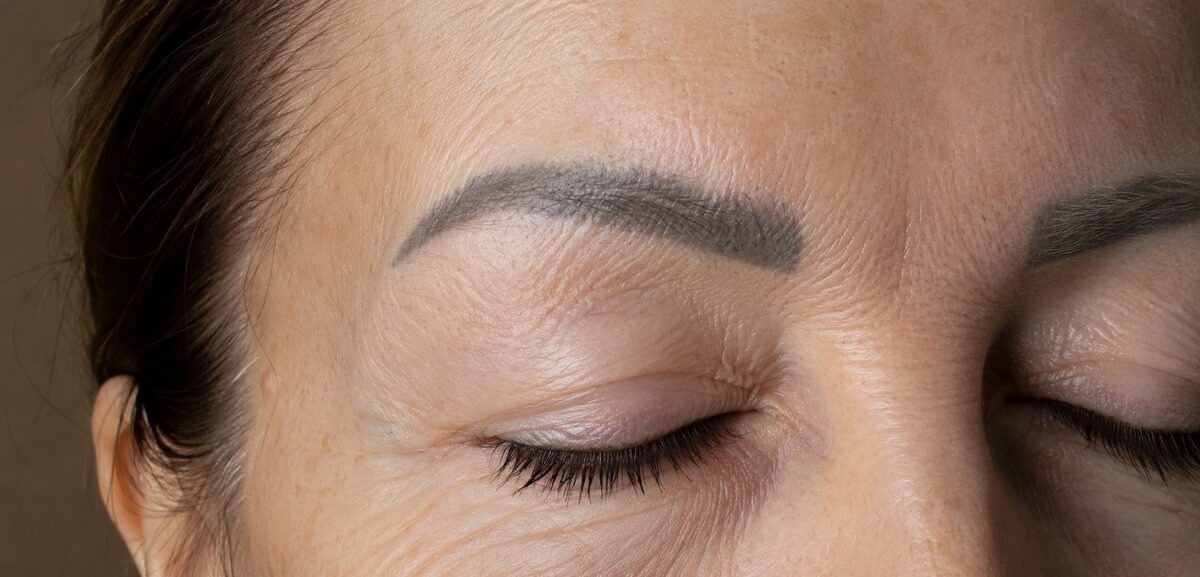
You're not imagining it. And you're not alone.
Microblading that faded into nothing after six months. Strokes that blurred into soft, undefined smudges instead of the crisp hair-like lines you were shown. Color that shifted from warm brown to ashy gray or flat blue over the first year. A shape that looked fine in the studio and somehow wrong on your face by the time everything healed.
These are not freak accidents. They're outcomes that happen regularly — often on specific skin types, with specific techniques, in the hands of artists who either didn't have enough experience or didn't fully disclose what microblading requires to succeed. And they're outcomes that, in most cases, can be corrected.
Here's an honest explanation of why microblading goes wrong, what each type of failure means, and what the realistic paths forward actually look like.
Why Microblading Goes Wrong — The Real Reasons
Microblading is a genuinely beautiful technique when it works. On the right skin type, with a skilled and experienced artist, the results can look completely indistinguishable from real brow hair. The problem isn't the technique itself — it's that microblading is frequently offered to clients who aren't ideal candidates for it, without that being disclosed upfront.
Your skin type wasn't suited for it. Microblading works best on dry to normal skin that holds a crisp edge well. On oily skin, the cuts made by the blade don't heal with clean edges — the sebum production causes the pigment to spread slightly as it heals, producing soft, blurry strokes instead of the sharp hair-like effect. On mature or thin skin, the same thing can happen — the skin's texture and laxity don't allow for the same precision that younger, firmer skin provides. If no one asked about your skin type before your appointment, this is likely part of what went wrong.
The pigment was implanted too deeply. Microblading pigment should sit in the upper dermis — a very specific, shallow layer of skin. When it goes deeper than it should, the skin's thickness filters the color, causing warm tones to disappear and leaving cooler, ashy residue. Deep implantation also causes strokes to spread over time, producing the blurred, merged look that many clients describe a year or two after their appointment.
The wrong pigment was used. Carbon-based and black pigments break down into cooler tones over time — gray, blue, and sometimes green. Many artists who trained primarily on body tattoo techniques bring those pigment habits into PMU work without fully understanding how differently cosmetic pigments need to behave. If your brows have shifted color significantly, this is often the reason.
The artist didn't have enough experience with your skin. Permanent makeup is a skill that deepens with time across many different clients and skin types. An artist who is earlier in their career — or who works primarily on younger, easier skin — may not have encountered enough mature, oily, or sensitive skin to know how to adjust their technique accordingly. This isn't a character flaw. It's a reality of experience.
Microblading was the wrong technique for what you wanted. Some clients walk away from microblading disappointed not because anything went technically wrong, but because microblading was never going to deliver the result they actually wanted. If you wanted full, defined brows with longevity and easy maintenance, powder brows were always the better technique — and if no one explained the difference clearly, that's a consultation failure, not yours.
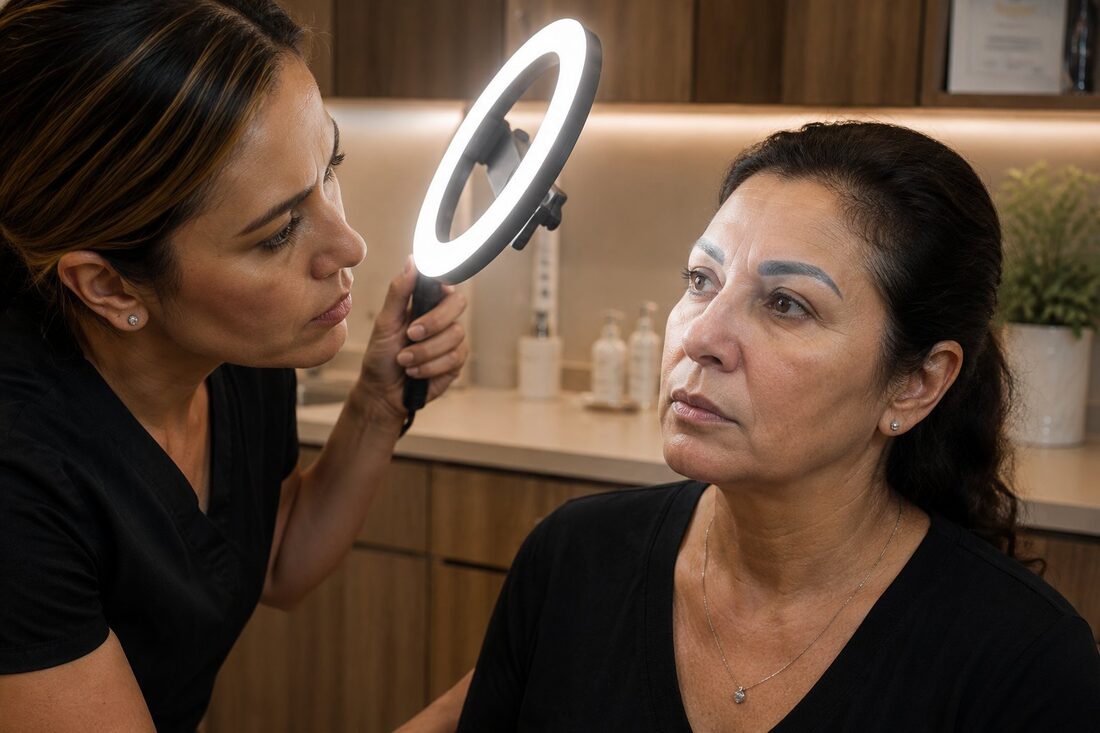
This is what a real correction assessment looks like — under good light, up close, reading exactly what the pigment is doing in the skin before making any plan.
What Each Type of Failure Looks Like — and What It Means
Strokes that blurred or spread. This is the most common microblading outcome on oily or mature skin. The individual hair strokes never developed the crispness shown in photos — or they did initially and then softened significantly within the first few months. The underlying cause is almost always skin type: the skin didn't hold the edge the way it needed to. Correction typically involves either waiting for further fading and then applying powder or nano brows over the existing work, or lightening the existing work first if the blurred strokes are still significantly pigmented.
Rapid or uneven fading. Some clients find their microblading fades within months — sometimes almost completely. On oily skin this is common, but it can also happen when pigment was implanted inconsistently or too shallowly. Uneven fading — where some areas hold and others don't — is particularly frustrating because it can make brows look patchy and asymmetrical. Correction here depends on what remains and what the skin looks like; in many cases, powder brows applied over the faded work produce an excellent result.
Color that shifted to gray, blue, or ashy tones. This is a pigment issue, not a healing issue. Carbon-based or black pigments break down into cooler tones over time, particularly when implanted at moderate depth. The correction path depends on saturation: lightly pigmented gray microblading can sometimes be corrected with a warm color overlay. More saturated cases require lightening or removal sessions first. At Kiss Kreations we use magnetic tattoo removal — the Linda Paradis technique — specifically for cases like this.
A shape that wasn't right from the beginning. Some microblading failures aren't about how it healed — they're about a shape that was never quite right. Too angular. Too high. Too straight. The brows that looked acceptable in the chair but somehow changed the way your face reads. Shape correction is the most involved type of correction, because fixing it requires either significantly fading the existing work or removing it before redesigning from a clean foundation.
Strokes that merged into a block. Multiple touch-up sessions on top of already-pigmented work can cause individual strokes to fill in and merge, producing a block or ombre effect rather than the hair-stroke look. This is what happens when microblading is repeatedly refreshed on skin that never held it cleanly. The result often looks like a softer powder brow — which, ironically, may be exactly what the skin needed from the beginning.
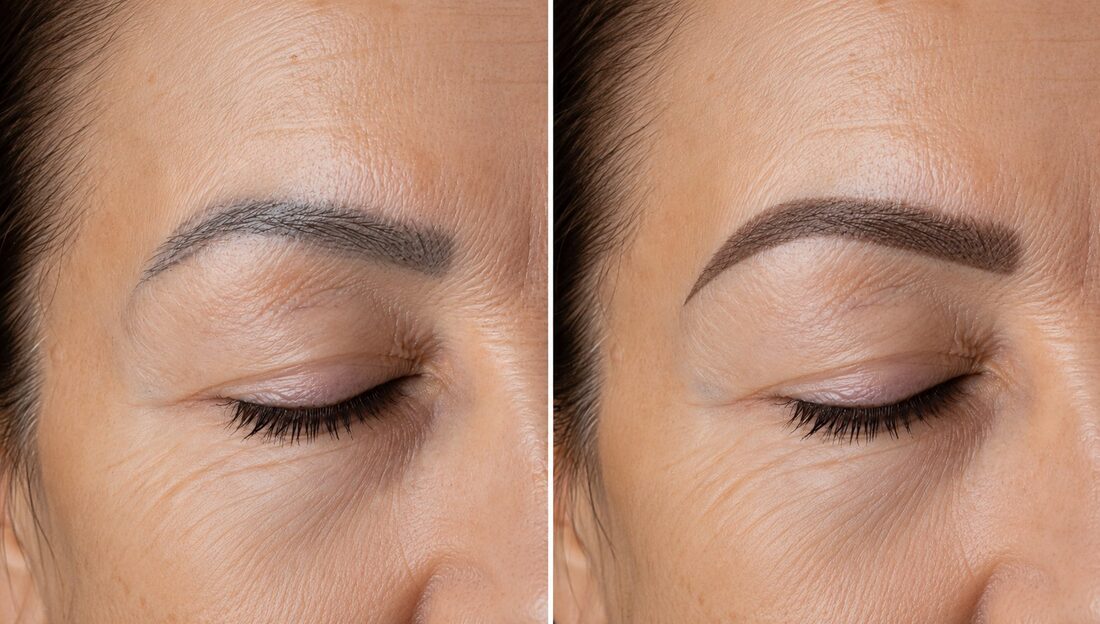
Left: blurred, faded microblading that never developed properly. Right: the same brow area after correction with powder brows. Same skin, different technique.
What Your Options Actually Are
Correction is not one thing. The right path depends entirely on what your brows actually look like — and that can only be assessed in person. But here's a general map of the options.
Powder brows or nano brows over existing work. When existing microblading has faded significantly and the saturation is manageable, applying powder brows or nano combination brows over the top is often the cleanest, most efficient correction path. The powder technique works beautifully over faded microblading — it covers residual strokes, adds warmth and definition, and produces a result that looks intentional rather than like damage control. This is the most common correction path we use at our Tempe studio.
Color neutralization. When the main issue is color shift rather than shape or saturation, it's sometimes possible to apply a carefully chosen corrective pigment over the existing work to neutralize the gray or blue tone and reintroduce warmth. This requires specific color theory knowledge and the right pigment formulation — it's not something that can be done without assessing the exact undertone of the shift.
Lightening sessions followed by fresh work. When the existing microblading is too saturated, too dark, or too structurally wrong to work over, lightening the area first creates the clean foundation needed for correction. We use magnetic tattoo removal for this — the Linda Paradis technique is gentle, effective, and specifically designed for cosmetic tattoo work. Lightening typically takes multiple sessions spaced several weeks apart before the skin is ready for new pigment.
Waiting. Sometimes the most practical first step is simply time. Microblading that's only a few months old and heavily saturated will be easier to work with in six months than it is today. This is hard to hear when you're living with brows you don't like — but attempting correction on very fresh, very saturated work often produces a less clean result than waiting for the skin to do some of the work naturally.
Quietly fed up. Most clients live with failed microblading for months before they look for answers. The good news is there almost always are some.
How to Know Which Path Is Right for You
There is genuinely no way to answer this without seeing your brows in person. Photos help — and you're welcome to send photos before booking — but the assessment that matters happens under good light, up close, with someone who has seen enough correction cases to read what the pigment is actually doing in your skin.
At our Tempe studio, a correction consultation involves looking at your brows in natural and studio light, asking about the full history of what was done and when, assessing pigment depth and saturation, and giving you a clear, honest plan — not a vague promise that we'll figure it out as we go.
We'll tell you what we see, what we think the right approach is, how many sessions to expect, and what the realistic outcome looks like. If the honest answer is that your brows need more time to fade before correction is worth attempting, we'll tell you that too. Our job is to get this right — not to book an appointment that sets you up for a disappointing result.
We see correction clients from across the East Valley — Chandler, Gilbert, Mesa, Scottsdale, Queen Creek, and beyond. If your microblading went wrong, you have options. The first step is just finding out what they are.
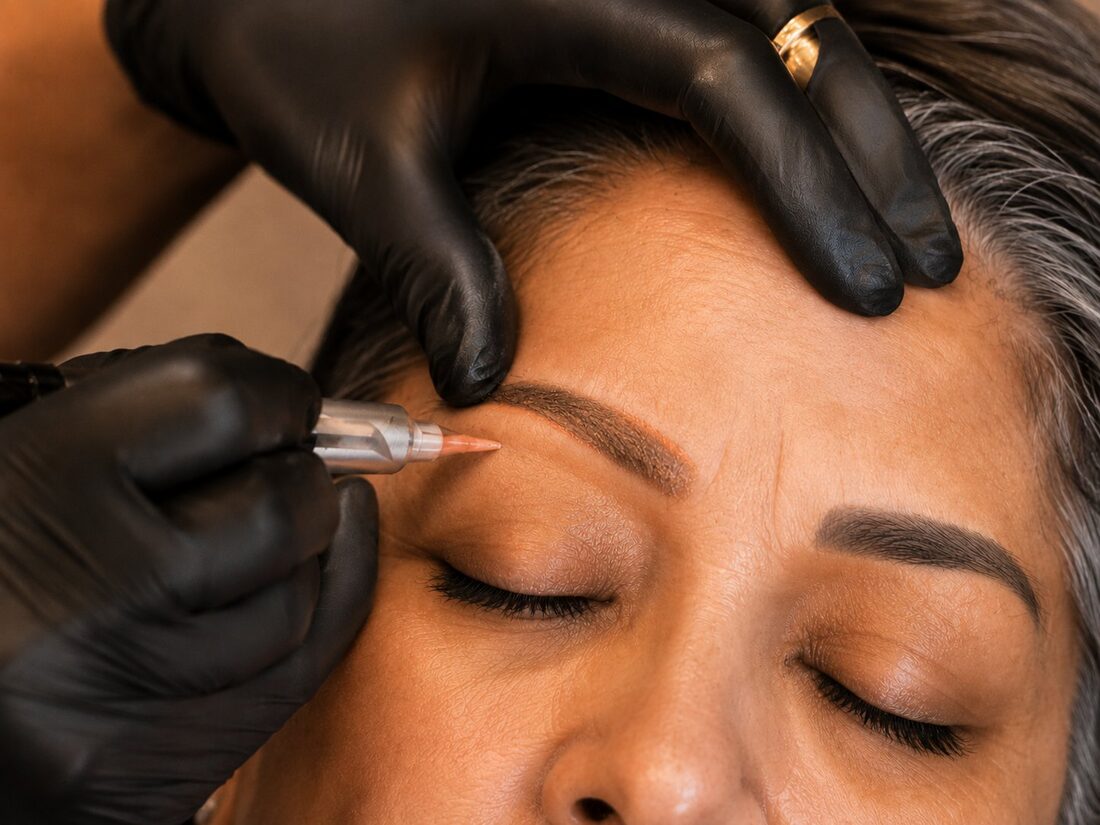
Correction work in progress — precise, unhurried, built around what the skin actually needs.
A Client Story
Lisa came to us from Scottsdale at 52. She'd had microblading done twice — the original appointment and a touch-up six weeks later — and neither had produced anything close to what she'd been shown in photos. The strokes had blurred almost immediately. By month three, her brows looked like soft, slightly smudged pencil marks rather than hair strokes. By month six, large sections had faded to almost nothing while others remained as dark, blurred patches.
She'd gone back to the original artist, who had recommended another touch-up. She'd declined. Something about doing the same thing again and expecting a different result didn't sit right with her.
At her consultation we looked at her brows carefully. Her skin was naturally oily in the brow area — the kind of skin that microblading consistently struggles with. The blurring and uneven fading were textbook outcomes for her skin type. Nothing unusual had gone wrong. The technique had simply never been right for her skin.
We waited four months for further fading, then applied powder brows over the existing work with a warm pigment selected specifically for her undertones. The healed result was everything the microblading had promised and never delivered — soft, full, natural-looking brows that held their color evenly and looked like they'd always been there.
She said it simply at her follow-up: "This is what I thought I was getting the first time."
For most clients with failed microblading, the right technique was always powder brows. They just weren't told that at the beginning.
Frequently Asked Questions
Why did my microblading go wrong?
The most common reasons are a mismatch between the technique and your skin type — microblading often blurs or fades on oily, mature, or sensitive skin — pigment implanted too deeply, the wrong pigment type used, or insufficient artist experience with your specific skin. In many cases, multiple factors contributed. Understanding which one applies to your situation helps determine the best correction path.
Can bad microblading be fixed?
In most cases, yes. The approach depends on what your brows look like — how saturated the remaining pigment is, what color it has shifted to, and whether the shape is workable. Many correction cases involve applying powder brows or nano combination brows over faded microblading, which produces a clean, natural result. More saturated or misshapen cases may require lightening sessions first. An in-person assessment is the only way to know which path makes sense for your brows.
My microblading turned gray or blue — is that fixable?
Yes — this is one of the most common correction cases we see at our Tempe studio. Gray or blue microblading is almost always caused by carbon-based or black pigment breaking down over time. The correction approach depends on saturation: lightly pigmented gray work may be correctable with a warm color overlay; more saturated cases typically require lightening sessions before new work can be applied cleanly. Come in and we'll tell you exactly where yours falls.
How long should I wait before getting microblading corrected?
It depends on how saturated the existing pigment is. Very fresh, very dark microblading is often better left to fade further before correction — attempting to work over heavily saturated strokes produces less clean results. Older, more faded work may be ready sooner. The best starting point is coming in for an assessment so we can look at what you actually have and give you an honest timeline rather than a general answer.
What is the best correction for failed microblading?
For most clients, powder brows applied over or after the existing microblading work produces the best result. Powder brows are well-suited to the skin types — oily, mature, sensitive — that microblading often struggles with, and they cover residual strokes cleanly while adding the definition and longevity that the microblading failed to deliver. In cases where the existing work is too saturated, magnetic tattoo removal lightens the area first before powder brows are applied.
How much does microblading correction cost?
Correction starts at $700 and goes up depending on what your brows actually need. If lightening or removal sessions are required before new work can begin, the total will be higher — removal adds sessions and time to the process. We don't quote correction pricing without seeing your brows in person, because the cost reflects what it actually takes to get your specific situation right.
Failed Microblading Is a Starting Point, Not an Ending
Most clients who come to us after bad microblading leave with exactly what they were trying to get in the first place — brows that look natural, hold their color, and work with their skin instead of against it. It takes the right assessment, the right technique, and enough honesty to tell you what will actually work.
Our studio is in Tempe and we see correction clients from across the East Valley — Chandler, Gilbert, Mesa, Scottsdale, Queen Creek, Ahwatukee, and beyond. Come in and let's look at your brows together.