
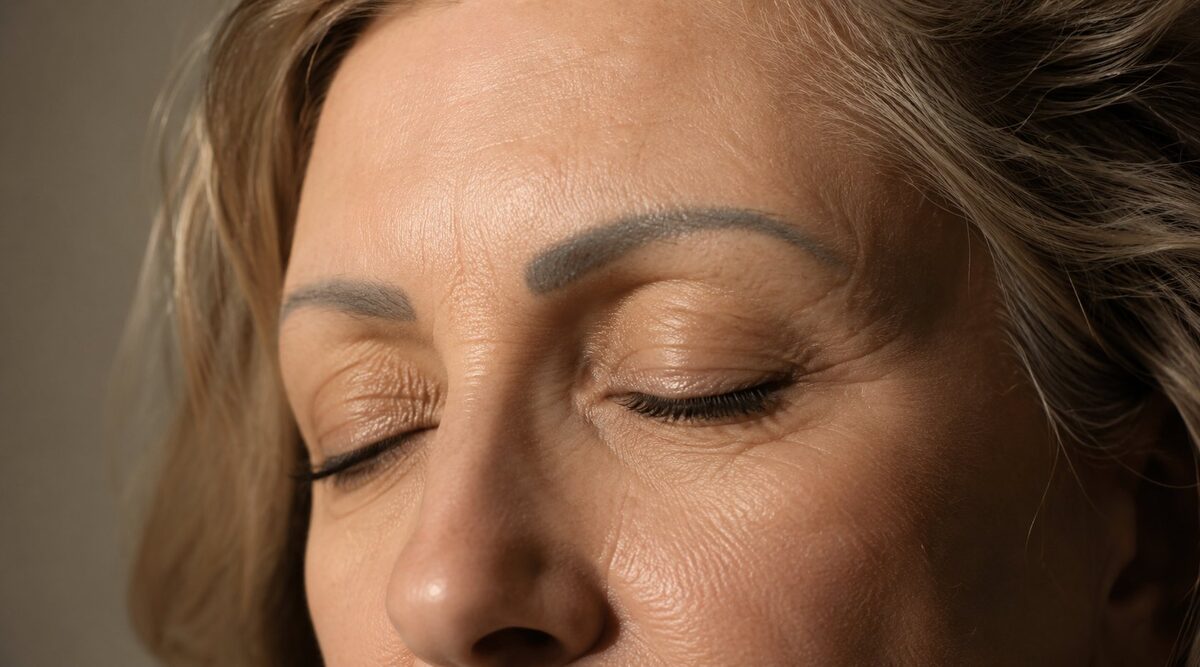
You noticed it gradually at first. A shift in tone. Something a little off about the color. And then one morning you looked in the mirror and the word that came to mind wasn't "brown" anymore — it was gray. Or blue. Or ashy. Or some combination that didn't look anything like what you walked out of that appointment with.
You went back and looked at your photos from right after the procedure. Those brows were warm, natural, perfectly shaped. These brows — the ones you have now — are something else entirely.
If that's where you are, you're not imagining it. Color shift in permanent makeup is real, it's common, and it has specific causes. More importantly, in most cases it can be corrected — but understanding what happened is the first step toward knowing what to do about it.
First — Why Does Pigment Change Color at All?
Permanent makeup pigment is not static. From the moment it's implanted into your skin, it begins a process of change — how it heals, how your immune system responds to it, how sun exposure affects it, and how the chemistry of the pigment itself breaks down over months and years.
This is completely normal and expected. All PMU pigment fades and shifts over time. The question is whether it's shifting the way it's supposed to — gradually and evenly into a softer version of the original color — or whether something has gone wrong that's causing it to shift into an unexpected hue.
When brows turn gray, blue, purple, orange, or red, something in the original application didn't account for how that particular pigment would behave in that particular skin. And there are several specific reasons that happens.
The Most Common Reasons Eyebrow Tattoos Turn Gray
The wrong type of pigment was used. This is the most common cause, and it's more widespread than most people realize. There are two main categories of pigment used in permanent makeup: iron oxide-based pigments and carbon-based (organic) pigments. They behave very differently in the skin over time. Carbon-based pigments — and particularly black pigment — are notorious for breaking down into cooler, bluer tones as they fade. When black or near-black pigment is used to create "dark" brows, gray and blue shift is almost inevitable.
The pigment was implanted too deeply. Permanent makeup is designed to sit in the upper dermis — a very specific layer of skin. When pigment is pushed too deep, two things happen: the color reads differently at the surface (the skin's depth filters the tone, making warm pigments appear cooler and gray), and the pigment tends to spread and blur over time. Deep implantation is one of the most common technical errors in PMU and one of the hardest to correct.
The color wasn't chosen for your undertones. A pigment that looks warm and brown in a jar doesn't always heal warm and brown in skin. Skin has undertones — warm, cool, neutral — and those undertones interact with pigment in ways that aren't always predictable without experience. An artist who doesn't account for your skin's undertones when selecting color may produce a result that heals beautifully at first and shifts over time into something ashy or gray.
Sun exposure accelerated the breakdown. UV exposure is one of the fastest ways to degrade PMU pigment. Arizona sunlight in particular is intense, and clients who spend significant time outdoors without SPF over their brows often see faster and more dramatic color shift than those who protect the area. This doesn't cause the gray tone on its own, but it can accelerate a shift that was already happening due to any of the above factors.
The original work was done with body tattoo ink. Body tattoo ink is formulated for the deeper layers of skin and is not designed for the delicate upper dermis where PMU pigment belongs. Some artists — particularly those without specialized PMU training — use body ink for brow work. The results can look fine initially, but body ink almost always shifts dramatically over time, producing the gray, blue, or green tones that are notoriously difficult to work over.
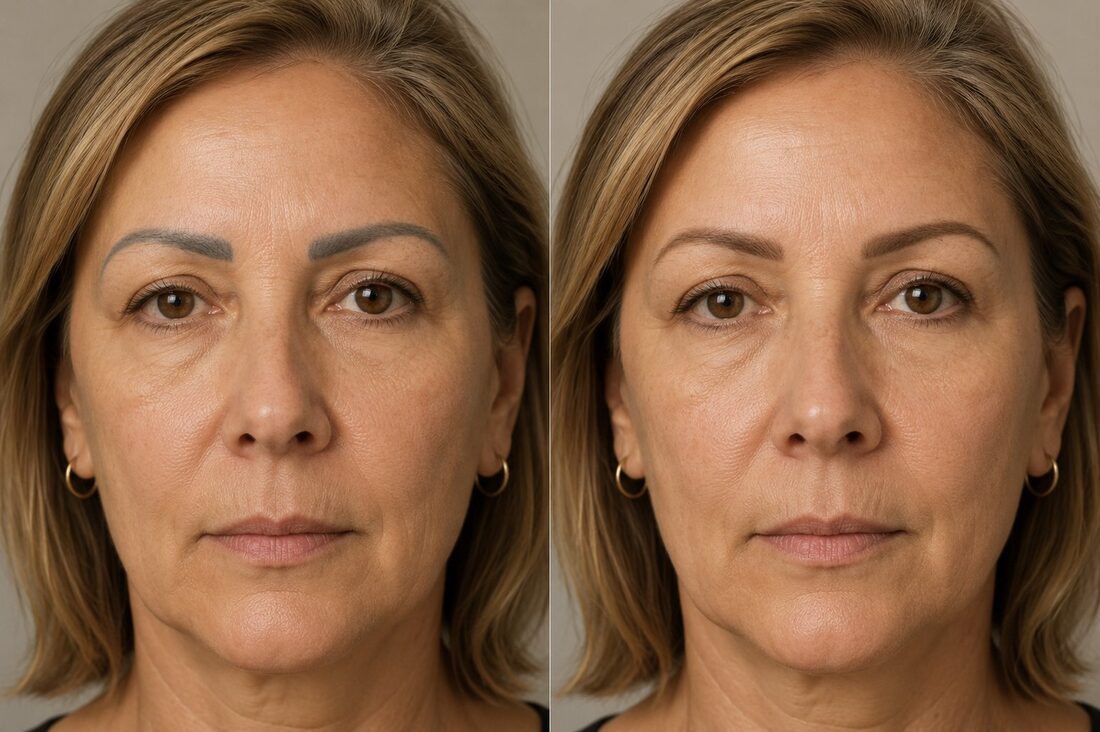
Before and after correction — same woman, same lighting. Left: gray-shifted PMU. Right: corrected powder brows with warm, iron oxide pigment.
What the Color Your Brows Turned Tells You
The specific color shift your brows have taken on is actually useful information. It tells a story about what happened in the original application.
Gray or ashy — usually indicates that the original pigment had cool undertones, or that a warm pigment broke down and lost its warm tones over time, leaving behind the cooler residual pigment molecules.
Blue or blue-gray — almost always indicates that black or very dark pigment was used, or that carbon-based pigment has broken down. This is one of the most common presentations we see in correction clients at our Tempe studio.
Purple or violet — typically a combination of cool pigment and the way your skin's natural undertones are interacting with the residual color. Pink or red skin undertones can shift cool pigments into the purple range.
Orange or red — often seen in older work or in pigments that were originally warm-toned. As the cooler pigment molecules break down faster than the warmer ones, what's left behind can read orange or red — particularly in clients with deeper skin tones.
Green — less common in brow work but can occur, particularly when dark pigments break down in certain skin types. More frequently seen in older eyeliner tattoos.
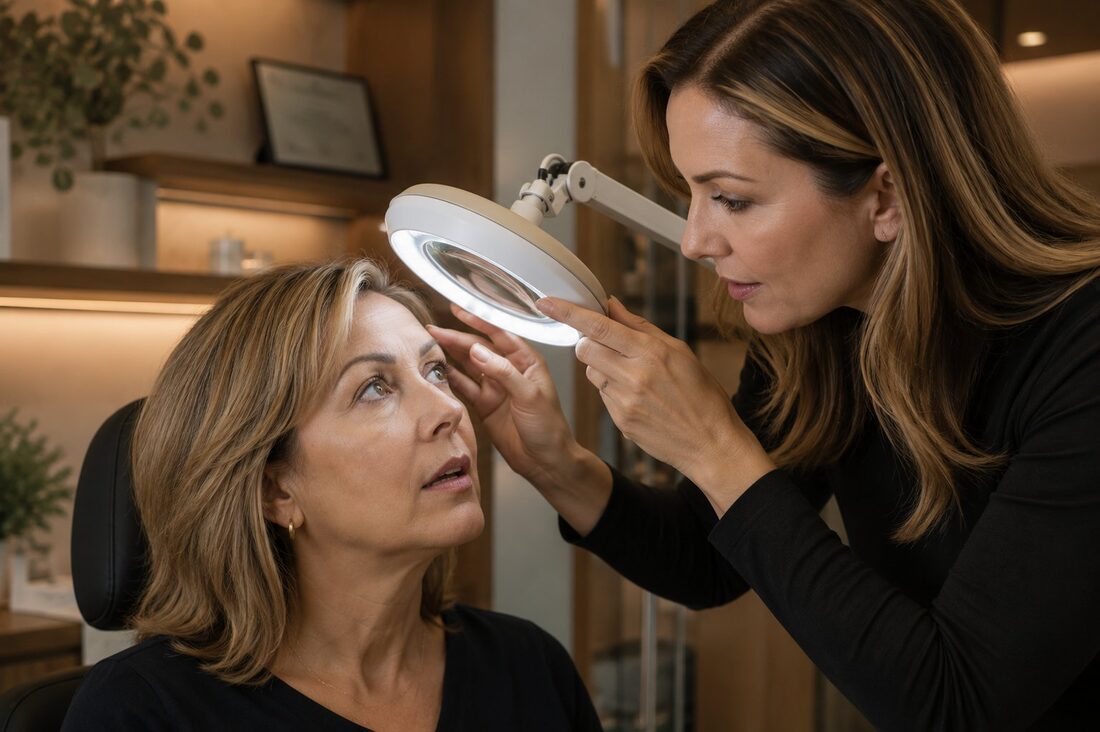
A proper assessment looks at pigment depth, saturation, and color shift under good light — not a quick glance. This is how correction plans are built.
Can Gray Eyebrow Tattoos Be Fixed?
In most cases, yes. But the honest answer is that correction is more complex than a fresh application, and the approach depends entirely on what your brows actually look like in person.
There are two main paths to correction:
Color correction over existing work. When the existing pigment is faded enough and the discoloration is primarily tonal rather than structural, it's sometimes possible to work directly over the existing brows with a carefully selected corrective pigment that neutralizes the gray or blue tone and reintroduces warmth. This approach works when the shape is still acceptable and the pigment saturation isn't too heavy.
Lightening or removal first. When the pigment is saturated, the color has shifted significantly, or the shape needs to be redesigned, the most reliable path is to lighten or remove the existing work before applying new pigment. At Kiss Kreations, we use magnetic tattoo removal — the Linda Paradis technique — which is a specialized method designed specifically for cosmetic tattoo removal. It's gentle, effective, and allows us to create a clean base before new work begins.
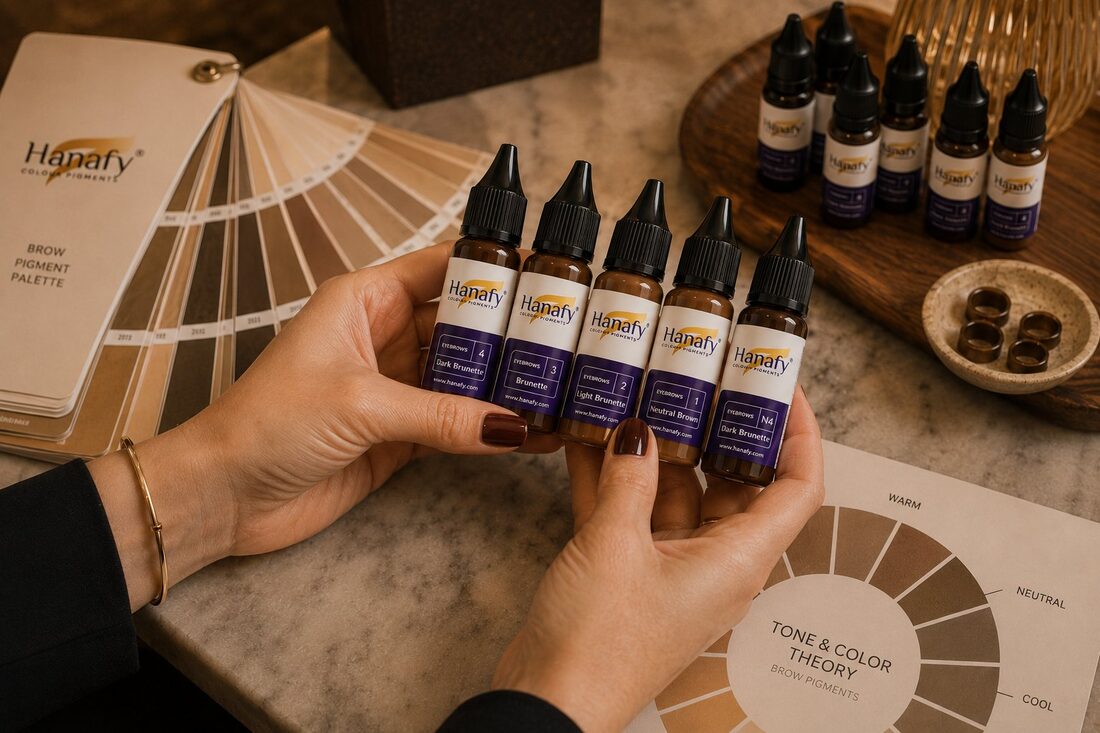
Pigment selection is where gray shifts are prevented — and where correction begins. The right color for your skin takes expertise, not guesswork.
Correction is not a one-appointment process. Depending on how much work is needed, it may involve multiple lightening sessions spaced several weeks apart, followed by a fresh application and touch-up. It takes patience — but the difference between living with brows that embarrass you every morning and waking up to brows you actually love is worth it.
What to Expect From a Correction Consultation
If you come into our Tempe studio for a correction consultation, here's what actually happens.
We look at your brows in person — in natural light, and up close. We assess the color, the saturation, the depth of the pigment, the shape, and the condition of the skin. We ask about your history: when the original work was done, how many sessions you've had, what products you use over the area, and how much sun exposure you get.
From all of that, we give you an honest picture of what correction would involve — how many sessions, what techniques, and a realistic timeline. We don't promise quick fixes, because correction work doesn't allow for them. What we do promise is a clear plan and a straight answer about what's possible for your specific brows.
We see correction clients from all across the East Valley — Chandler, Gilbert, Mesa, Scottsdale, Queen Creek, and beyond — and the one thing almost all of them say is that they wish they'd come in sooner instead of waiting and hoping the color would somehow improve on its own. It won't. But it can be fixed.

No pencil. No powder. Just her face — out in the world, unbothered. That's what corrected brows look like in real life.
A Client Story
Marlene was 61 when she first noticed her brows had started to look off. She'd had them done four years earlier at a salon that also offered lash extensions and facials — permanent makeup wasn't the primary focus, but the price had been reasonable and the portfolio looked fine.
By year two, the warm brown she'd walked out with had started to cool. By year three, she was describing them to people as "grayish." By the time she came to us, they were a flat, cool gray-blue that she covered with brow pencil every single morning — which had been the entire reason she got permanent brows in the first place.
At her consultation, we identified the issue immediately: the pigment used had been carbon-based, implanted slightly too deep, with no account taken for her skin's cool undertones. A textbook gray shift case.
Her correction took three sessions over four months — two lightening appointments to reduce the existing pigment, then a fresh powder brow application with a warm, iron oxide pigment selected specifically for her skin tone and undertones.
At her touch-up appointment, she sent us a photo first. Her brows. Morning light. No pencil. Just her face. The caption was two words: "Finally. Me."
Frequently Asked Questions
Why did my eyebrow tattoo turn gray?
Eyebrow tattoos turn gray when the pigment used was not formulated correctly for PMU, was implanted too deeply, or was not selected with your skin's undertones in mind. Carbon-based and black pigments are particularly prone to breaking down into gray and blue tones over time. Sun exposure can accelerate this shift. It's one of the most common issues we see in correction clients, and in most cases it can be addressed.
Can gray eyebrow tattoos be fixed?
Yes — in most cases. The approach depends on how saturated the pigment is, how deep it sits, and how much the color has shifted. Some corrections can be done by applying a carefully chosen corrective pigment over the existing work. Others require lightening or removal sessions first to create a workable base. The only way to know what your brows need is an in-person assessment.
Why do eyebrow tattoos turn blue or purple?
Blue or purple tones usually indicate that black or dark carbon-based pigment was used and has broken down over time, or that the pigment was placed too deeply in the skin. The depth of the dermis causes warm tones to filter out first, leaving cooler residual color at the surface. This is one of the most common color shifts we correct at our Tempe studio.
How long does eyebrow tattoo correction take?
It depends on what your brows actually need. A straightforward color correction over faded, lightly pigmented work might be done in one to two sessions. More complex corrections — where the pigment is saturated or the shape needs to be fully redesigned — typically require multiple lightening sessions spaced four to six weeks apart before new work can begin. We give every client a realistic timeline at their consultation so there are no surprises.
What is magnetic tattoo removal and how does it work?
Magnetic tattoo removal — the technique we use at Kiss Kreations, developed by Linda Paradis — is a specialized method designed specifically for cosmetic tattoo removal. Unlike laser removal, which can be too aggressive for the delicate skin of the brow area, this technique uses a specialized solution to draw pigment out of the skin gradually and gently. It's particularly effective for PMU correction work and allows us to lighten existing pigment enough to apply fresh, correctly colored work on a clean base.
How much does eyebrow tattoo correction cost?
Correction starts at $700 and goes up depending on how much work is involved. If tattoo removal sessions are needed before new work can begin, the total investment will be higher — removal adds both time and cost to the process. The only way to give you an accurate number is to see your brows in person. We don't quote correction pricing without an assessment, because every case is genuinely different.
Gray Brows Aren't the End of the Story
What happened to your brows is fixable. It takes the right assessment, the right technique, and an artist who has done this many times before — but the result on the other side is brows you actually want to wake up to.
If your brows have shifted and you're not sure what to do next, come in. Our studio is in Tempe and we work with correction clients from all across the East Valley. Let's look at your brows together and give you a clear, honest picture of what's possible.